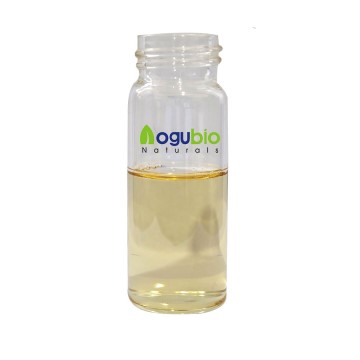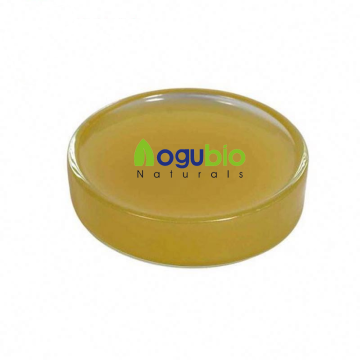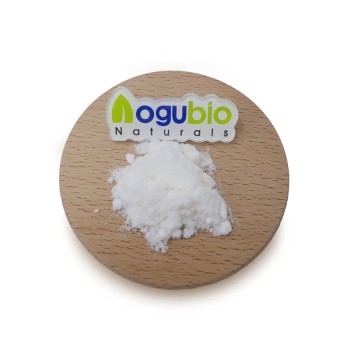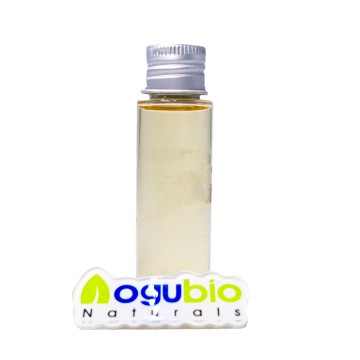
Explore our premium-grade cosmetic surfactants and glucoside derivatives — formulated for exceptional skin compatibility and performance.
Decyl Glucoside (CAS 68515-73-1) is a mild, plant-derived nonionic surfactant widely used in skin care and personal care formulations. It is produced by combining glucose (derived from corn starch) with decanol (a fatty alcohol sourced from coconut or palm oil) through a condensation reaction. The result is a biodegradable, non-toxic, and skin-compatible cleansing agent that has rapidly become one of the most sought-after cosmetic ingredients on the global market.
Unlike traditional sulfate-based surfactants such as Sodium Lauryl Sulfate (SLS), Decyl Glucoside does not strip the skin's natural lipid barrier, making it exceptionally gentle for sensitive skin, baby care formulations, and daily-use products. Its broad pH stability — functional across a pH range of 4 to 10 — and excellent foaming properties have made it an indispensable ingredient in modern cosmetic chemistry.
Key Fact: Decyl Glucoside is certified by Ecocert and COSMOS organic standards, and is listed as an approved ingredient in NATRUE-certified natural cosmetics. It is free from ethylene oxide derivatives, making it a truly "clean beauty" surfactant.
Chemically, Decyl Glucoside belongs to the alkyl polyglucoside (APG) family — a class of surfactants derived entirely from renewable plant sugars and fatty alcohols. Its HLB (Hydrophilic–Lipophilic Balance) value ranges from 11.5 to 13.5, which classifies it as an effective oil-in-water emulsifier and cleansing surfactant. It produces rich, stable foam even at low concentrations (typically effective at 2–20% in formulations), and is compatible with anionic, cationic, amphoteric, and nonionic surfactants.
Decyl Glucoside exhibits excellent emulsification and wetting properties. When combined with co-surfactants such as Coco Glucoside or Lauryl Glucoside, synergistic effects further improve cleansing efficiency and skin feel. Its mildness is attributed to the absence of harsh electrophilic groups in its molecular structure, dramatically reducing the risk of skin irritation, redness, or allergic responses.
Decyl Glucoside's versatility spans across every major personal care category. Below are the primary application domains driving commercial demand.
As the star ingredient in sulfate-free facial cleansers, Decyl Glucoside delivers thorough yet gentle makeup removal, sebum control, and skin-microbiome preservation without disrupting the acid mantle.
Its ultra-mild nature makes it the gold standard for baby personal care products. Brands like Johnson's and countless private-label lines use it as a primary surfactant to meet pediatric safety standards globally.
Dermatologist-tested body washes, eczema-relief cleansers, and rosacea-friendly foaming cleansers increasingly specify Decyl Glucoside as their primary surfactant due to its hypoallergenic profile.
In prestige haircare, Decyl Glucoside is paired with Coco Glucoside to create clarifying yet scalp-nourishing shampoo systems. It is particularly effective in color-safe and keratin-treatment-compatible formulations.
Its stable foam-building capacity — combined with skin-conditioning properties — makes it ideal for bath foams, shower gels, and luxury bubble bath products targeting wellness and spa segments.
As brands pursue COSMOS Organic and NATRUE certifications, Decyl Glucoside has become a formulation cornerstone for certified natural cleansing ranges across skincare, body care, and intimate hygiene sectors.
The global alkyl polyglucoside (APG) market — of which Decyl Glucoside is a flagship component — is undergoing rapid transformation driven by consumer preferences, regulatory shifts, and sustainability imperatives.
The global clean beauty market is projected to exceed $22 billion by 2028. Consumers are actively avoiding sulphates, parabens, and petrochemical surfactants, directly accelerating demand for APG surfactants like Decyl Glucoside. Major brands including L'Oréal, Unilever, and Beiersdorf have committed to reformulating their portfolios with biodegradable surfactant systems.
The EU's Cosmetics Regulation (EC 1223/2009) and growing restrictions in markets like South Korea and Japan on irritant surfactants are creating favorable substitution dynamics. ECHA's ongoing review of SLS derivatives is expected to further accelerate the transition to glucoside-based alternatives.
China, South Korea, and Japan — collectively the world's largest cosmetics markets — are witnessing explosive demand for mild cleansing actives in K-beauty and J-beauty formulations. China's C-beauty movement is also driving domestic brands to adopt Decyl Glucoside as a premium, "nature-forward" ingredient narrative.
Decyl Glucoside's 100% bio-based origin and rapid biodegradability align perfectly with the cosmetics industry's transition to circular economy principles. Life cycle analyses (LCAs) consistently show APG surfactants have a significantly lower carbon footprint compared to ethoxylated alternatives, making them preferred in ESG-conscious supply chains.
The democratization of "prestige" cosmetic ingredients is enabling mass-market brands to reformulate entry-level cleansers with Decyl Glucoside, creating "masstige" positioning. This broadens the total addressable market for APG surfactants across all price segments.
Next-generation research is exploring Decyl Glucoside's role as a penetration enhancer for active cosmetic ingredients, and its synergistic performance with peptides, hyaluronic acid, and probiotic formulations. This functional convergence is opening new premium formulation opportunities in the cosmeceutical sector.
Founded in 2013 and headquartered in the prestigious high-tech zone of Xi'an, Xi'an Aoge Biotech Co., Ltd., along with its subsidiaries Xi'an Imaherb Biotech Co., Ltd. and Xi'an Nahanutri Biotech Co., Ltd., has established itself as a leading force in the cosmetics raw materials industry.
Our expansive cooperative factory, spanning 1,000 mu (approximately 165 acres), is equipped with state-of-the-art extraction technology. This advanced infrastructure allows us to manufacture a wide array of premium cosmetic raw materials. Our product line includes natural plant extracts specifically designed for organic cosmetics, as well as synthetic ingredients for high-end skincare formulations. These raw materials serve as the foundation for a multitude of skincare, haircare, and makeup products, ensuring superior quality and efficacy throughout the entire production process.
Our in-house laboratory is equipped with cutting-edge instruments for rigorous quality control. We utilize UPLC and HPLC for analyzing active components, GC and GC-MS for detecting solvent residues, ICP-MS for identifying heavy metals, and GC/LC-MS-MS for assessing pesticide residues. Additionally, we employ HPTLC and IR for identification purposes, ELISA for determining ORAC values, PSL for evaluating irradiation residues, and conduct comprehensive microbiology tests. These measures guarantee that our raw materials adhere to stringent international standards.
At Aogebio, innovation, quality, and sustainability are the bedrock of our corporate philosophy.
We pour relentless efforts into research and development, constantly exploring novel raw materials and advanced manufacturing techniques to stay ahead in the dynamic cosmetics industry.
Rigorous quality control is embedded in every step of our production process, from raw material sourcing to final product delivery, guaranteeing that each item adheres to the most stringent international standards.
We actively embrace sustainable practices, striving to minimize our environmental footprint through eco-friendly production methods and responsible sourcing across all our product lines.
This unwavering dedication enables us not only to consistently offer products of unparalleled excellence but also to contribute to the long-term, healthy development of the entire cosmetics industry.
Discover our full range of cosmetic-grade surfactants, glucosides, and specialty actives for professional formulations.